

By Kip Kirchberg
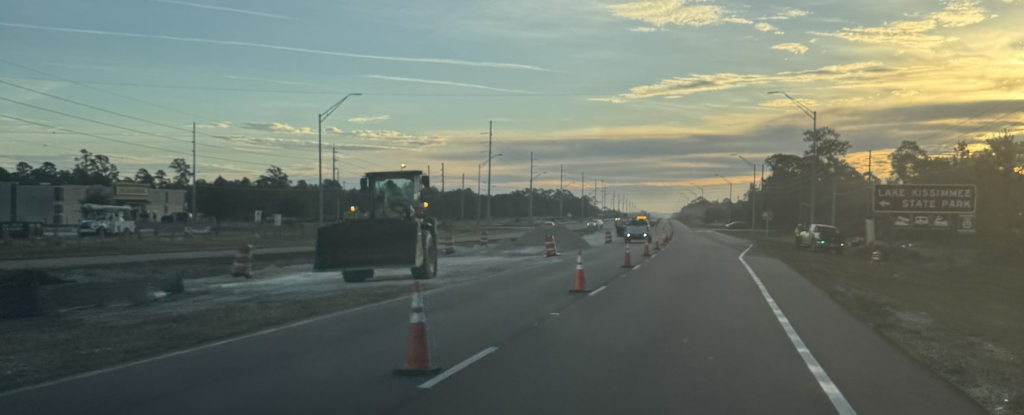
Out on State Road 60, just past where the strip malls thin out and pastures take over, the highway crosses Walk in Water Road and Boy Scout Camp Road. It is the kind of place that still looks like old Florida from the driver’s seat: ranch land, orange groves, a good fishing lake, and more sky than concrete.
It feels like a road where not much changes.
But everything is changing, and a single turn lane project at that hilltop intersection says a lot about where Polk County is headed.
Polk County and the state are rebuilding the median and turn movements where SR 60 meets Walk in Water Road and Boy Scout Camp Road. Once the work is done, drivers heading east on 60 will not be able to simply cross over or turn left at Boy Scout anymore. If you want to go north, you will have to go past the intersection, make a U turn on SR 60, then come back, on a stretch where the road crests and visibility is not always great.
On paper, it is a safety project. Engineers are trying to reduce the dangerous crossing and left turn movements that have caused serious crashes there. In theory, fewer places to cross four lanes of fast traffic should mean fewer wrecks. But for the people who live, work, or camp off Boy Scout and Walk in Water, it also means longer, more complicated trips and new risks where those U turns will happen.
Zoom out, and this small change is one piece of a much bigger puzzle: the rebuilt US 27 and SR 60 interchange, resurfacing and turn lane changes between Lake Wales and Bartow, and new connectors like the Central Polk Parkway. Project by project, the country highway many people remember is being reshaped into a high speed corridor for commuters, trucks, and growth.
That raises a harder question: Are we designing the kind of county we want to live in, or just retrofitting roads to chase growth that is already here? Safer intersections and fewer deadly crashes are hard to argue against. But every time we close a crossover, add a lane, or push traffic into a new pattern, we trade a little bit of the old rhythm of this place for a new one.
If you drive SR 60 through the Walk in Water area, expect daytime lane closures, lower work zone speeds, and flaggers while the new pattern goes in. The cones will come down eventually. The question is what stays behind.
When you find yourself doing that U turn to get to Boy Scout or Walk in Water a year from now, ask yourself: Does this feel like the kind of Polk County you want to see more of, or a compromise you did not really get to weigh in on? The turn lane is coming either way. What comes after it is still, at least partly, up to us.